Powered by Blogger.
Showing posts with label Vegetables. Show all posts

How to Incorporate More Vegetables in Your Diet

For the college athlete, vegetables and fruits play an important role. Damage and inflammation occur in the body due to exercise and the main way to fight that inflammation is to incorporate more anti-inflammatory foods. Fruits and vegetables are highly anti-inflammatory and should be incorporated on a daily basis. In fact, the athlete has a higher demand for certain vitamins and minerals on top of the need to fight inflammation and therefore, there is a higher recommendation for fruit and vegetable consumption (at least 7 cups a day of fruits and vegetables combined). Most people love fruits and have no issues incorporating them into their daily routine, whether it be in a smoothie, as a snack or as a sweet ending to a meal. However, many struggle with how and where to add all those vegetables.

                
Here are some healthy ways to incorporate more vegetables in your daily routine:

  • For breakfast, add vegetables to your omelette such as spinach, red peppers, onions, mushrooms, tomatoes, etc.
  • If having a breakfast burrito, consider adding salsa.
  • If having a smoothie consider adding things like carrots, beets, kale, spinach, celery, etc. My favorite juice is 50/50 100% orange juice and 100% carrot juice, yum! (note; any smoothie with vegetables needs to have a good balance of fruits as well or else it will taste kind of yucky).
  • Use vegetables as part of your daily snacking for example: carrots and hummus, celery and peanut butter/cream cheese, bell peppers and cottage cheese, tomatoes and Greek yogurt or just a vegetable mix (baby carrots, cherry tomatoes and cucumbers)
  • When making sauces such as tomato sauce add more vegetables to it, for example: saute onion, garlic, zucchini, squash and eggplant and then add the typical tomato sauce you use. That makes for a richer, tastier sauce
  • Use vegetable rich soups such as minestrone and salads as an appetizer. 
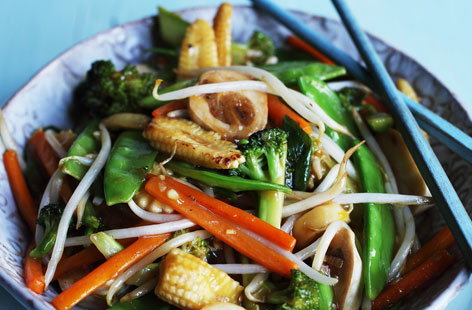
  • Try to create a meal based on vegetables. Consider even going meatless for one day. Examples to try: vegetable stir fry, vegetable lasagna, big salad.
                   
  • Have a side of salad each meal. Make sure you have variety so you do not get bored.
  • What ever vegetable you like, take 2-3 servings of it instead of 1. Example: if you like broccoli, have 2 cups of it, not just one.
  • If you like grilling, make sure you always grill some vegetables, whether they are in kabob form or not. See some ideas on previous blog or on Eating Well .
  • Always have cut up vegetables visible so that you will always be reminded they are there and they can be a good grab and go option.
  • Use shredded or pureed vegetables for things like muffins, cakes, meatloaf, meat balls, breads, casseroles, etc. Example of vegetables you can use: sweet potato, zucchini, carrots. Here is a zucchini, carrot apple muffin recipe.
  • When having pizza, make sure you sprinkle more vegetables such as spinach, onion, mushrooms, etc.
  • When you go to a party or dinner be the one that brings the vegetables. Typically that's the one thing lacking from a party.
  • If you are tired and don't feel like cooking, microwave frozen veggies. They are quick and easy. In fact, it's the best "fast food" around.
  • If you enjoy using the slow cooker, almost everything done in it can have added vegetables. Example: add carrots, peppers and squash to your chili. 
  • Stuff vegetables. Example: make stuffed peppers with meat and rice, stuff tomatoes with cauliflower mash and pesto, Stuff mushrooms with garlic, etc. 
  • Add diced vegetables to your tacos.
All vegetables can be incorporated whether fresh, frozen or canned. I am positive there are far more many ways but these healthy ways are all simple and doable. They can help get any athlete to the 7 cups a day recommendation of vegetables and fruits.  Here are some easy recipes to help get you going.

Falls' Savory Squash

Summer is out, fall is in. With fall comes an array of fantastic vegetables and fruits. The vegetables most associated with fall are pumpkin, squash, or anything orange for that matter. Pumpkin can be saved for October.

There are many types of squash but the ones I would like to talk about are considered winter squash: acorn squash, spaghetti squash, butternut squash, delicata squash, sweet dumpling squash, buttercup squash and ambercup squash. Although they are considered winter squash, their season actually starts end of summer beginning of fall. They can last for a fairly long time due to their thick rind.


Nutritionally, squash is low calorie, contains complex carbohydrates, high in fiber and rich with vitamins and minerals. It's a good source of Vitamin A, Vitamin C, magnesium and potassium as well as other B vitamins and minerals. Vitamin A is a potent antioxidant that helps us fight certain cancers and it is also helps maintain good and healthy vision as well as healthy skin. Vitamin C is an antioxidant that helps us keep a healthy immune system, is involved in wound healing and tissue repair and helps fight inflammation. Magnesium takes part in many reactions in the body including: keeping normal muscle, immune and nerve function, bone health and many more. Potassium helps maintain fluid and electrolytes in the body. All those qualities make squash an amazing vegetable!

Here are some great recipes for each kind:
- Acorn squash - Roasted acorn squash soup
- Butternut squash - Butternut squash, caramelized onion and spinach lasagna
- Spaghetti squash - Spaghetti squash Greek style
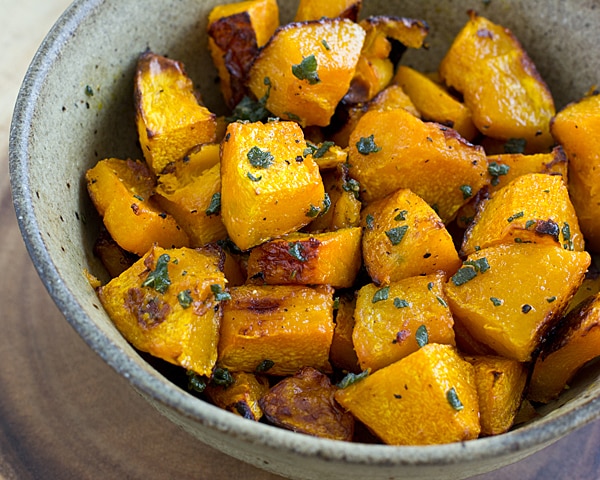
- Ambercup squash-  Roasted Ambercup Squash

Ingredients:
Ambercup squash cut into cubes or 1.5" slices
2 Tbsp olive oil
1/4 tsp sea salt
Pinch of pepper1/4 tsp garlic powder
2 tsp of fresh rosemary

1. Heat oven to 400 degrees F
2. Spread aluminum foil on a oven tray
3. Mix squash with oil, pepper, garlic powder in a bowl and stir
4. Spread squash on tray
5. Spread rosemary on squash
6. Bake until soft and golden (about 40 minutes) and serve

Delicata squash - Garlic delicata
Buttercup squash - Roasted buttercup squash quesadillas
Sweet dumpling squash - Baked sweet dumpling squash

No matter what squash you choose you can use any of these recipes. All you need is to pick one at the grocery store and start experimenting. I promise, you will not regret it. Squash is a great addition to any athletes plate.


Eggplant is in Season

Once in a while I like choosing a vegetable that not many people are familiar with that's in season. I do it because a varied diet is very important just like a varied training program is. In addition, vegetables are packed with antioxidants (compounds that help us fight "toxins" in the body) as well as other important minerals and vitamins. I don't want you to miss out, especially if you are avoiding it because you have no idea what to do with it.

Today I chose one of my favorite vegetables, the eggplant. Egg what?! Yes eggplant.


Eggplant, also called aubergine, is a night shade vegetable originally from India (eggplant is actually classified as a fruit but we treat it like a vegetable). It comes in multiple shapes and colors but the most common one in north America is dark purple and oval shaped on the outside but cream colored on the inside. It is used in many cuisines including: Italian, Indian, Turkish, Greek, Thai and more. Eggplant is eaten cooked, not raw.

Nutritionally it is low in calories and carbohydrates, fat free and cholesterol free. It is a very good source of fiber and contains a phytonutrient called Nasunin that's located in the peel of the eggplant. The peel also contains phytonutrients called anthocyanins. Nasunin and anthocyanins are potent antioxidants that help us fight inflammation and some cancers as well as help us protect multiple cells including brain cells and heart cells. Eggplant is a good source of potassium, manganese, copper and several B vitamins. B vitamins are important for metabolism and the minerals help with multiple functions in the body including bone health, electrolyte balance and wound healing just to name a few.
Eggplant can be used as an appetizer, side dish or even as part of the main dish. Here are some ideas of how to experiment with this fantastic vegetable:

Baba Ganoush - Middle Eastern eggplant spread

Ingredients
1 Medium size Eggplant
2 Tbsp Tahini Paste
1 tsp Minced Garlic
2 Tbsp Lemon juice
Salt & Pepper for taste
2 Tbsp Cilantro chopped fine (Garnish)

1. Heat oven to 450 degrees F. Cover eggplant with aluminum foil and bake until completely soft (20-25 minutes). Alternatively you can roast on the grill (about 10 minutes) until soft and peel is charred. If roasting on the grill, aluminum foil is not needed (for the smokey flavor).
2. Let cool for 15-20 minutes.
3. Cut eggplant in half lengthwise and with a spoon take out all the pulp and move to medium bowl.
4. Depending how smooth you like it, you can smash the pulp with a fork or put in the food processor for a smoother texture.
5. Add the tahini, garlic, lemon juice, salt and pepper to the eggplant pulp and stir.
6. Garnish with cilantro and serve.
Note; this tends to taste even better after it sits in the fridge for a while. Serve with crackers or pita bread.

Here is a great eggplant parmesan recipe

Baked Eggplant - A tasty and easy side

Ingredients
2 Eggplants cut into rounds
2 Tbsp Olive Oil
3 Tbsp of Fresh Rosemary (can use 2 Tbsp dried)
0.5 tsp Kosher Salt
0.5 tsp Pepper
1 tsp Garlic Powder

1. Heat oven to 375 degrees F.
2. Spread eggplant on baking sheet.
3. Brush the eggplant with oil
4. Sprinkle the rosemary, salt, pepper and garlic evenly as you can
5. Bake until soft and brown (about 20-30 minutes)
6. Serve as a side for fish, steak or chicken

Press here for more easy eggplant recipes.

Make sure that next time you go to the grocery store you pick yourself an eggplant and try one of these tasty recipes. Feel free to post here how it came out.
Happy Eating!


Can an Athlete Fuel Right if They are Vegetarian or Vegan?

More and more athletes and people decide to go on a vegan or vegetarian diet. Athletes like Mac Danzig (MMA), Ronda Rousey (MMA), Carl Lewis (runner), Robert Parish (basketball), Prince Fielder (baseball), Bill Pearl (bodybuilding) and Martina Navratilova (tennis) have all adapted a vegetarian or vegan diet and are some of the best in the world at their sport. So we know its possible, but how do they do it?

First, lets define the difference between a vegetarian and a vegan diet:
Vegetarian diet- Vegetarian diets avoid all animal meat and fish and are divided into 3 types: Lacto-ovo vegetarian - do not eat meat or fish products but eat dairy and eggs. Lacto vegetarian - do not eat meat, fish or eggs but eat dairy and Ovo vegetarian - do not eat meat, fish or dairy but eat eggs. Some vegetarians do eat fish which by definition is considered pescatarian but they call themselves vegetarian.
Vegan diet- Avoid all animal products and their by products including: eggs, dairy, butter and honey.
                           

A vegetarian diet has many health reported benefits including: reduced risk for type 2 diabetes, high blood pressure, heart disease and some cancers. In addition, studies show that there is no difference in performance when comparing a diet that contains animal products versus the diet that doesn't. However, the vegetarian or vegan diet needs to be well planned and varied in order to meet the demands of the sport.
Getting enough calories, protein and other micro-nutrients are important when it comes to vegetarian and vegan athletes and this is how they can meet their needs:

Energy (calories) - Plant based diets are rich with fiber which fills us up and in turn may reduce intake. Since energy needs for an athlete may be very high it is important to monitor weight and body composition. Nonetheless, most research shows that vegetarians and vegans can meet their daily energy needs with a little bit of planning.

Protein - Interestingly, although vegetarian athletes eat less protein than their omnivore counterpart, they do meet or even exceed their protein needs as long as the diet is varied and energy intake is adequate for the activity. However, for vegans, it may be more difficult to meet the needs. Plant proteins, in general, are not digested as well as animal proteins and therefore, recommendations for protein intake are 10% higher than usually advised for athletes (1.3 - 1.8 gr/kg/day or 0.59-0.81 gr/lb/day). Meeting protein needs does become an issue only when someone decides to limit their energy intake. Good sources for vegetarians are: eggs, milk, tofu, soy beans, lentils, chick peas, quinoa, split peas, chick peas, beans, seeds, nuts, hemp seeds, oats and other whole grains.

Iron - Iron delivers oxygen to muscles making it especially important for endurance athletes. Most vegetarian and vegan athletes get enough iron. Plant foods have a lower bio-availability (less absorption) of iron compared to animal products. Animal products have heme-iron (about 15-40% of iron is absorbed) and plant foods have non-heme iron (1-15% of iron is absorbed). How much Iron is absorbed is based on whether you have inhibitors or enhancers in your diet. Inhibitors include: calcium, coffee, tea, cocoa and phytates (present in legumes such as lentils and chick peas as well as whole grains). Enhancers include: vitamin C (in citrus fruit, berries, red pepper) and carotenoids (red and orange fruits and vegetables). Some food preparation methods, such as soaking and sprouting beans, grains and seeds can also help with absorbency. Due to less bio-availability, vegetarians and vegans have higher iron needs than omnivores. Dark greens (kale, asparagus, broccoli, spinach, swiss chard, etc) as well as tofu, lentils, seeds and soy beans can help meet iron needs if eaten in a good amount.

                                
Calcium- Calcium is important for bone health as well as muscle function. This mineral is more of a concern with vegans since they eliminate all dairy items. Therefore, vegans have shown to have higher risk of fracture probably due to not getting enough calcium in the diet. Nonetheless, it is still possible to get calcium from fortified foods (soy milk, almond milk, rice milk, orange juice, breakfast cereals etc.) as well as seeds, nuts and vegetables. Similar to iron, absorption of calcium may be inhibited by certain compounds such as oxalates (present in spinach and swiss chard) as well as phytates. Good sources are: fortified milk alternatives, bok choy, kale, arugula, tofu, tahini, chia seeds, almonds.

Vitamin D - This vitamin is not only important for bone health but also for athletic performance (check my previous blog for more info). The best source of vitamin D is from sun exposure between 10 am - 3 pm for 5-30 minutes (time depends on skin color, age, season, latitude and sunscreen use). We can also find it in fortified foods such as milk and the alternatives, some breakfast cereals and orange juice. Since we live in the midwest we do not get sun exposure during the winter and it's fairly difficult to reach the recommended daily allowance for vitamin D via food consumption, therefore, a supplement could be considered.

B12 - Is one of the only micro-nutrients that is fairly difficult to meet when avoiding all animal products. Vegetarians that eat dairy and eggs can easily meet needs. You can find B12 in fortified foods such as breakfast cereal, meat analogs and nutritional yeast, however, for a vegan athlete that may not be enough. In those cases a supplement would be advised. It does take several years to become deficient in B12 but deficiency will cause decrease in aerobic performance as well as brain functions.
                 
Zinc - Zinc is important for immune health as well as other processes related to DNA. Similar to Iron, zinc absorption is inhibited by phytates. Supplements containing folic acid, calcium, iron, copper and magnesium will also inhibit absorption (not sources from food). Due to the inhibitors, zinc needs for vegans are 50% higher. Consumption of protein, citrus fruit (orange, grapefruit, etc.) and food preparations such as mentioned in the iron section can all help with increasing absorbency. In certain cases, supplementation is advised in vegans. Good sources are: beans, whole grains, pumpkin seeds, hemp seeds and nuts.

Omega 3 fatty acids (DHA/EPA) - Omega 3 (mainly DHA/EPA) has been shown to have anti-inflammatory properties that help recovery post workout as well as other health benefits. EPA and DHA are present mainly in fish and algae. You can find also omega 3 in the form of ALA (has not shown to have the same benefits as DHA/EPA) which is found in plant derived products such as chia and flax seeds, almonds, walnuts, canola oil and soy. However, ALA does not convert well to EPA or DHA. Seaweed can also be a great source of DHA/EPA but most people don't eat enough of it. Supplementation could be considered in those instances. Note; most omega 3 supplements are from fish, therefore, make sure label says vegetarian/vegan.

Whether you are on a similar diet or wanting to try a vegetarian/vegan diet, make sure you consult with a sports dietitian to help you figure out how to create a diet that will help you compete at your best.
If supplementation is needed, make sure you also consult with your primary physician.
For some healthy recipes press this link.
If you want to start of small, try meatless Monday.
No matter what people tell you, you can be great at your sport even with a vegetarian/vegan diet as long as you plan ahead!


Grilling Season is on Its Way

This up coming Sunday, June 15th, is fathers day. What better way to celebrate fathers day with a good old BBQ meal (lunch or dinner).
Grilling is a great way to eat healthier as it eliminates a lot of the fat found in other cooking methods such as frying and pan frying. Moreover, it gives food this great smokey flavor that makes anything taste better.
To help assist build a complete & healthy grilled meal My Plate shall be our guide.


For healthy protein we can use: fish (salmon, walleye), chicken breast, loin or sirloin of beef/pork
For healthy grains we can choose a starchy vegetable: grill corn on the cob, grilled sweet potato or just make some brown rice.
For healthy vegetables we can grill up some asparagus, zucchini, summer squash and onions or create vegetable skewers. Cheese can also be added in skewers (ex: halumi, mozzarella)  
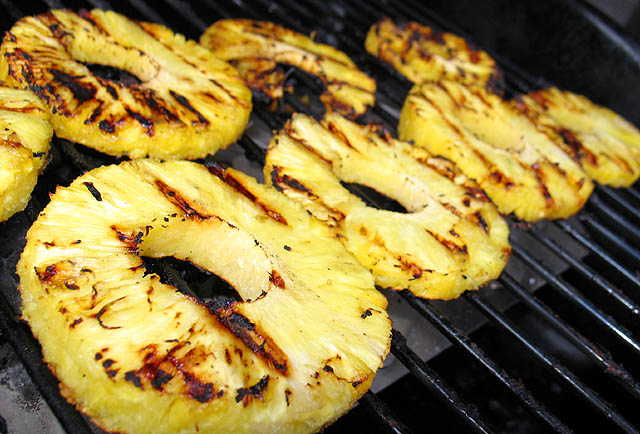
For healthy fruits we can have a fruit salad or even grill some pineapple with cinnamon.
Before you start grilling, make sure you clean the grill well. You can do so buy taking half an onion and running it over your hot grill before putting anything on it. Make sure you do the same when you are done as well.

Here are some recipes:
This recipe of Grilled Trout is from Cooking Light website

Ingredients
1 Tbps of fine sea salt
2 tsp of sugar
4 (7 oz) dressed rainbow trout
cooking spray 
1/4 tsp black pepper
2 (1oz) bunches dill sprigs
2 limes thinly sliced

Grilled Trout Recipe

  • Preparation
  • 1. Combine 2 cups water, sea salt, and sugar in a shallow dish; add fish. Let stand 20 minutes. Drain.
  • 2. Prepare charcoal fire in a chimney starter; let coals burn until flames die down. Pour hot coals out of starter; pile on one side of grill. Coat grill grate with cooking spray; put grate in place over coals.
  • 3. Sprinkle 1/4 teaspoon salt and pepper over fish flesh. Divide dill and lime slices evenly among fish cavities. Coat outside of fish with cooking spray. Place fish over direct heat; grill 4 minutes. Turn over; move to indirect heat. Grill 12 minutes or until done

  • This recipe is for grilled vegetables:
  • Ingredients
    1 zucchini cut into round circles
    1 summer squash cut into round circles
    1 medium red onion cut into thick pieces
    1 cup of cherry tomatoes
    1 cup small mushrooms
    2 Tbsp olive oil
    1 Tbsp garlic powder
    1 tsp sea salt
    Fresh rosemary
    Pepper

    Preparation
    1. Mix all vegetables together with oil, salt, pepper, garlic powder and rosemary. Let sit for 15-20 minutes
    2. Take as much skewers as needed and start putting vegetables on each skewer in a variety.
    3. Place skewers on direct heat. Grill for 5-10 minutes. Turn over and
    grill 5-10 minutes or until done
  • For dessert you may want to use this great pineapple recipe (clean the grill before you put the pineapple in order to prevent meaty taste and contamination):

    Ingredients
    1 medium size pineapple cut into circles or chunks
    1 Tbsp cinnamon

    Preparation
    1. Sprinkle cinnamon all over pineapple
    2. Place pineapple with cinnamon directly on the grill.
    Grill for 5-10 minutes or until done

  • There you have it! Grilling like a pro with My Plate.
  • Happy Fathers Day!